This year I planted fewer tomatoes than I have in years, fenced in a fraction of the space I used to till, and harvested more usable food than ever. If you’d told me that three years ago, I wouldn’t have believed you.
For the first few seasons on this homestead, my garden dreams kept growing. I started with a small garden the first year that was highly successful. Then as I continued watching YouTube videos, reading books about market gardeners, and learning about no-till — for some reason I felt like I had to garden that same way. I got 2 huge silage tarps (50’x100′) and laid them out where I wanted my bigger garden to establish, spent time making the rows, attempted to woodchip the paths — all while trying to build a house and watch my babies.
Looking back, I set myself up for failure. Not only did I not have enough time to care for my garden, it also lacked the proper infrastructure to make it successful — fencing to keep animals out, water access, good soil (mostly clay here), and I had no idea how to feed my plants nor the time to observe them to identify and correct issues before it was too late.
It wasn’t until I watched this video by Codi & Michelle over at More Than Farmers that I finally realized I could downsize my garden and still be wildly successful. Not because I wasn’t capable of it, but because I wasn’t honest with myself about my available time, and the garden was now hard to access with 2 little ones in tow.
TL:DR
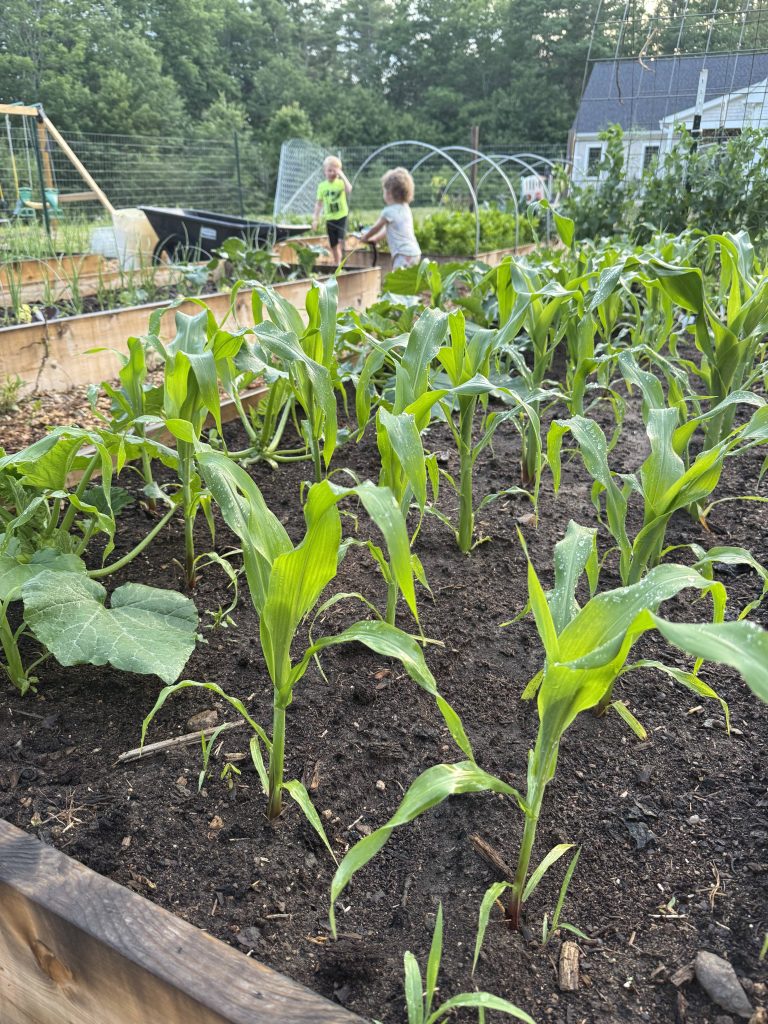
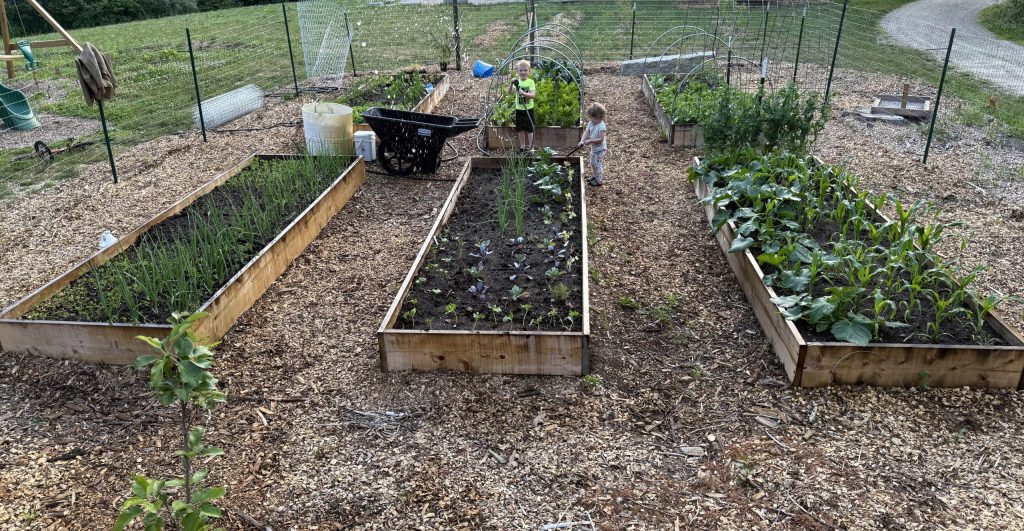
A garden doesn’t need to be big to be productive — it needs water, food, fencing, and the time to actually manage it. A small, well-tended garden will out-produce a large, neglected one almost every time. I learned this the hard way after scaling back from silage-tarped rows to a handful of well-managed raised beds, and getting a better harvest doing it.
The 4 Things You Need For a Successful Garden
There are four things a successful garden requires: water, food, fencing, and time. Get any one of these wrong — at any garden size — and you’ll be fighting an uphill battle all season.
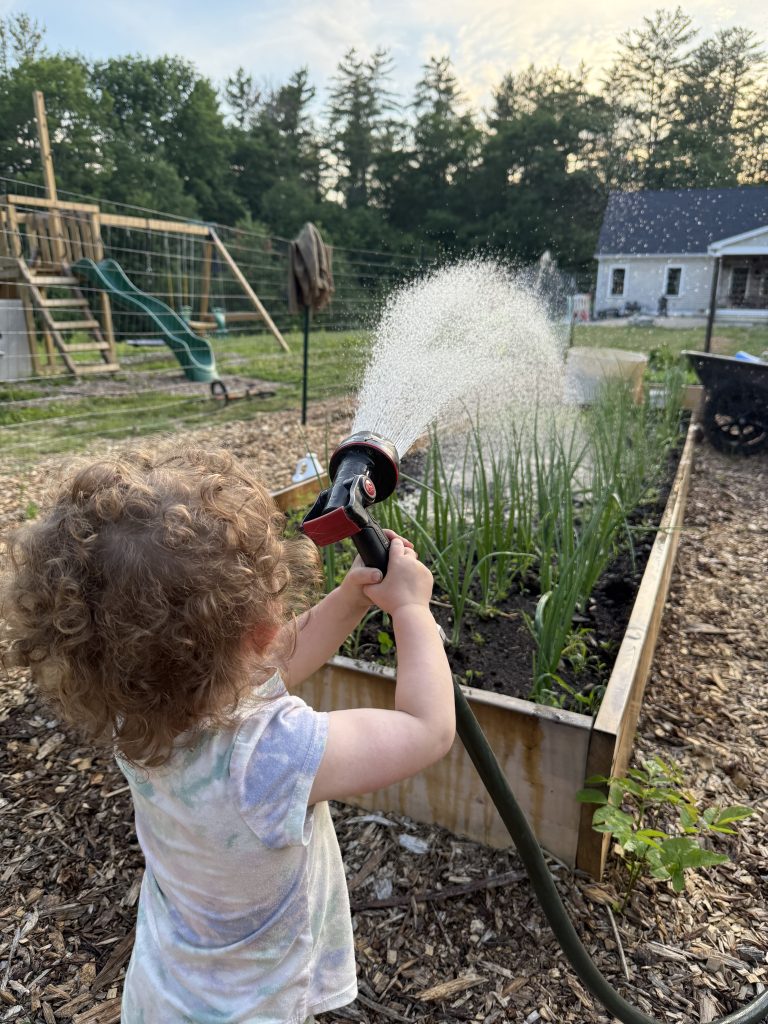
Water. I’ve always underestimated how much water plants require. Planting a garden without a rough watering plan — where the water is coming from, how it gets to the garden, when you’ll actually apply it — is one way to be unsuccessful with your garden even before you plant it. As we built our homestead, access to fresh water has been a surprising struggle. We’ve managed to drill 3 wells that all have salt water intrusion, so we water from a novel shallow dug well we installed a few years back ([more on that soon]).
Food. Feeding your plants can come in the form of soil building, compost, or specific inputs and fertilizers. We built raised beds this year and used mostly aged horse manure for the soil, simply because we had an abundance of it on our horse farm. As a first-year garden, I also observed some stunted growth, so I immediately fed with a liquid fish fertilizer to boost my plants and then took a soil test to determine what was lacking. Based on the results, I added a general fertilizer (Espoma Garden-Tone) and targeted blood meal for heavy feeders.
Fencing. Regardless of location, there’s always going to be animals searching for their next meal. This is why fencing is a top priority for me with any garden now. I’ve struggled with gardens and fruit trees being affected by animals, but never truly understood how much damage animals do to crops until I compared apple trees. I’ll make a separate post about that soon.
Time. This was the area I wasn’t honest with myself about — how much time I actually had to dedicate to a garden. Without time to observe, weed, harvest, and fertilize, your garden won’t be wildly successful regardless of how big it is. This is the primary reason I scaled my garden back.
Smaller Gardens Can Produce More
One mindset shift I made this year was realizing that a smaller, well-managed garden can actually produce more food than a large, neglected one. I always thought if I had 50 tomato plants, I’d at least get a moderate harvest to get us by. As it turns out, 50 tomato plants waste a lot of unnecessary time from seeding to transplanting, all for a dismal harvest at best if there’s no follow-up management.
Instead of 50 tomato plants, I was much more intentional this year with only 10 Roma tomatoes and 6 cherry tomatoes (3 different varieties, for an assortment of colors and flavors). I had a couple plants left over, so I gifted them to friends — and that felt really good.
The Garden I Actually Have Time For
I won’t pretend downsizing was an easy mental shift. There’s a version of me that still sees an empty field and starts mentally laying out rows. But the garden I have now — small enough to walk every bed in a few minutes, fenced well enough that I’m not gambling the season on whatever wanders out of the woods — is the first one that’s actually fit the life I’m living, not the life I saw on YouTube.
If you’re standing where I was, eyeing more space than you can realistically tend: start smaller than feels ambitious. You can always expand once the water, food, and fencing are actually dialed in. Expanding a working system is easy. Rescuing a sprawling one mid-season, with two kids in tow, is not.
FAQ
How big should a beginner’s garden actually be? Smaller than you think. Start with whatever you can fully water, fence, and walk through in a few minutes each day — even a handful of raised beds. You can always expand once that smaller garden is genuinely under control.
Can a small garden really feed a family? Yes, if it’s well-managed. A handful of intentionally chosen plants with consistent water, feeding, and fencing will outproduce a much larger garden that doesn’t get the same attention.
What’s the biggest mistake people make when starting a garden? Sizing the garden to their ambition instead of their available time. Water, food, and fencing are solvable with planning — time is the one resource you can’t manufacture more of, so it should set the upper limit on garden size.